
1.Structural and Functional Differences
1.1Adjustable Louvers vs Fixed Beams
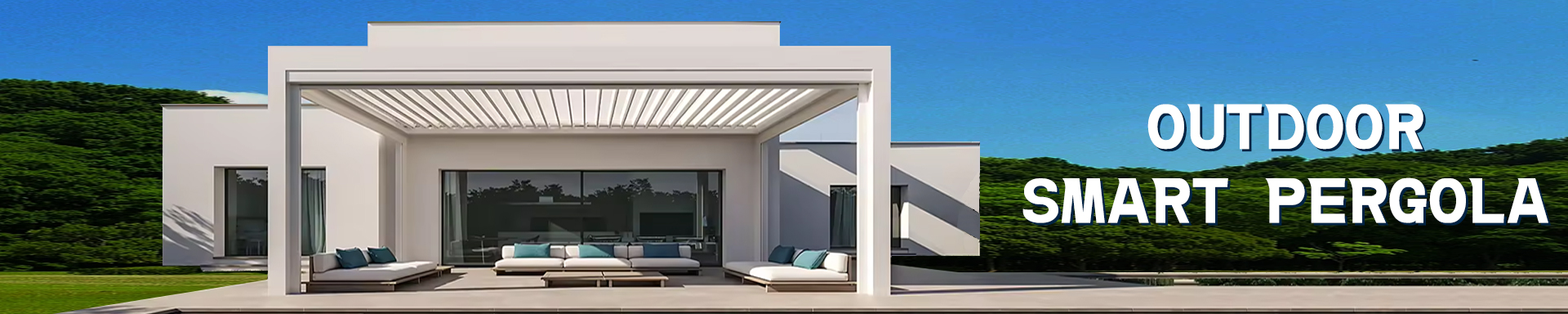
Louvered pergolas feature adjustable louvers that rotate 0–150°, giving homeowners full control over sunlight, shade, and airflow. In contrast, traditional pergolas use fixed beams that provide a static shade, leaving outdoor areas exposed to rain or direct sun. For example, installing a 12x16 feet Louvres Pergola allows a patio to stay comfortable during sudden showers or hot afternoons without adding separate covers.
Key points:
-
Adjustable louvers provide dynamic sun and rain management.
-
Fixed beams offer constant shade but cannot respond to weather changes.
-
Louvered systems reduce the need for external shading solutions.
| Feature | Louvered Pergola | Traditional Pergola |
|---|---|---|
| Sun Control | Adjustable 0–150° | Fixed |
| Rain Protection | Full closure | None |
| Airflow | Controlled ventilation | Natural gaps only |
| Motorization | Optional, 50–250W | Not available |
| Price Range | $5,000–$20,000 | $3,500–$8,000 |
1.2Sun and Rain Control Capabilities
Louvered pergolas let you respond instantly to weather changes. Manual models operate with a hand crank, while motorized units run on 110–240V motors, consuming 50–250W. Traditional pergolas rely on permanent shade fabric or awnings that cannot adjust dynamically.
Practical scenario: during a backyard brunch, homeowners can tilt louvers at 30° for morning sun, then fully close them when clouds bring rain. Modern setups, like an Aluminum modern pergola,integrate sensors to automatically adjust louvers based on rainfall and sunlight intensity.
1.3Ventilation and Airflow
Ventilation is a major difference. Louvered systems allow hot air to escape while cooler air circulates, keeping outdoor spaces comfortable. Traditional pergolas do not control airflow beyond the gaps between beams, often leaving patios hotter and less inviting in summer.
For example, a 14x18 feet Aluminum pergola house in Texas reported 10–15% cooler patio temperatures compared to a fixed wooden pergola nearby. Optimal louver angle for airflow typically ranges from 30–45°, balancing shade and ventilation.
Step-by-step tip for airflow optimization:
-
Set louvers to 30° during hot mornings to vent heat.
-
Adjust to 45° midday to maintain comfortable shade.
-
Fully close during rain or heavy sun to protect furniture.
Noise and Environmental Adaptation
Louvered pergolas can also reduce environmental noise when fully closed, making them suitable for patios near streets or busy neighborhoods. Traditional pergolas offer no such benefit. Aluminum louvered models also resist rust and UV damage, extending their lifespan to 15–20 years, compared to 8–12 years for wooden fixed pergolas.
families using a louvered pergola for outdoor dining or small gatherings can enjoy quiet, shaded spaces even in noisy urban areas, with less maintenance over time.
2. Material and Durability Comparison
2.1 Aluminum and Wood Differences
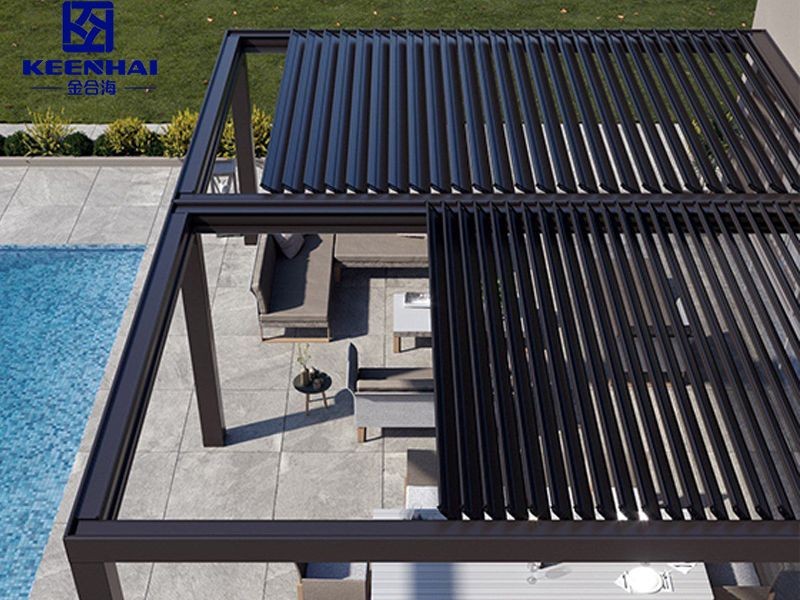
Aluminum pergolas are lightweight, rust-resistant, and virtually maintenance-free. They typically weigh 15–20% less than comparable wooden structures but offer higher structural stability in windy or rainy conditions. Wooden pergolas, such as cedar or redwood, have a warmer, natural look, but they require regular sealing and are more prone to rot or insect damage.
| Feature | Aluminum Pergola | Wooden Pergola |
|---|---|---|
| Weight | 15–20% lighter | Heavier, can warp |
| Strength | High, withstands 100+ mph wind | Moderate, may weaken over time |
| Rot Resistance | Excellent | Needs sealing every 1–2 years |
| Lifespan | 15–20 years | 8–12 years |
| Color Options | Powder-coated, wide variety | Limited to natural stains |
A 12x16 feet Aluminum Pergolas installed on a rooftop terrace maintained its color and structure after 5 years of Texas sun and rain, while a wooden pergola in the same spot showed signs of fading and slight warping after 2 years.
2.2 Weather Resistance and Lifespan
Aluminum louvered pergolas excel in extreme weather. Powder-coated finishes protect against UV rays, corrosion, and heavy rain. Wooden pergolas can last 8–12 years with careful maintenance, but constant sun, rain, or snow accelerates wear. Composite materials offer a middle ground: moderate maintenance, decent lifespan, but heavier and more expensive upfront.
| Material | UV Resistance | Rain Protection | Snow Load Capacity | Expected Lifespan |
|---|---|---|---|---|
| Aluminum | Excellent | Full | High | 15–20 years |
| Wood | Moderate | Partial | Medium | 8–12 years |
| Composite | Good | Full | Medium | 12–15 years |
Homeowners in humid or coastal areas often prefer aluminum because wood absorbs moisture and can swell or crack, which also increases long-term maintenance costs.
2.3 Maintenance Requirements
Maintenance is a major factor in cost over time. Aluminum pergolas only need occasional washing with water and mild detergent to remove dust and debris. Wooden pergolas require:
-
Annual inspection for rot, insects, and loose fasteners.
-
Sealing or staining every 1–2 years to maintain color and prevent weather damage.
-
Replacing boards or beams when rot or warping occurs, which can cost $200–$500 per replacement.
Motorized aluminum pergolas have 50–250W motors, which might need occasional lubrication or electrical checkups, but overall they demand far less upkeep than wood.
3. Cost Analysis
3.1 Initial Purchase Cost
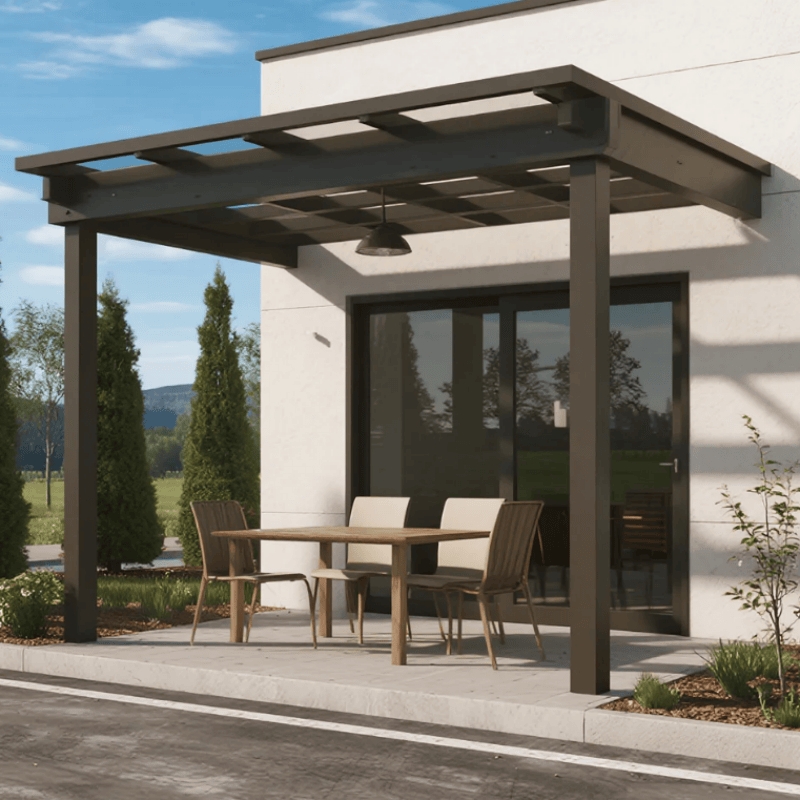
The initial price of a louvered pergola varies widely depending on size, material, and features. Aluminum models generally start at $5,000 for a 10x10 feet setup and can go up to $20,000 for larger, motorized configurations. Wooden options cost $3,500–$8,000 for similar dimensions, but require more long-term maintenance.
For a 12x16 feet Aluminum pergola house installed in a backyard, the base price was around $7,500, including powder-coated finish and standard motorized louvers.
Price influencing factors:
-
Material selection (aluminum vs wood vs composite)
-
Size and coverage area
-
Motorization and automation options
-
Customization or architectural design complexity
3.2 Installation Expenses
Installation costs depend on the site conditions, complexity, and whether professional labor is used. Typical installation fees for aluminum louvered pergolas range from $1,500–$4,000, which includes anchoring, leveling, and electrical connections for motorized louvers. Wooden pergolas are slightly cheaper, $1,000–$2,500, but require more hands-on labor for leveling and securing posts.
For example, a Aluminum modern pergola with motorized louvers on a concrete patio involved:
-
Preparing the concrete slab and leveling posts
-
Assembling aluminum frame and louvers (modular sections)
-
Connecting and testing motorized louvers (110–240V, 50–250W)
Installation tip: motorized systems are more complex but save time in the long run compared to manual models.
3.3 Long-Term Maintenance Costs
Long-term maintenance strongly affects the total cost of ownership. Aluminum louvered pergolas only require annual washing and occasional inspection of motors. Wooden pergolas need:
-
Sealing or staining every 1–2 years ($100–$300 per session)
-
Repairing warped or rotting boards ($200–$500 per replacement)
-
Checking fasteners and posts regularly
| Cost Aspect | Aluminum Pergola | Wooden Pergola |
|---|---|---|
| Annual Cleaning | $50–$100 | $50–$100 |
| Protective Coating | Not required | $100–$300 |
| Repairs | Rare, minor | $200–$500 per board |
| Motor Maintenance | $50–$100/year | N/A |
A well-maintained aluminum pergola can last 15–20 years with minimal cost, whereas wooden pergolas often require ongoing investment, which can add up to $3,000–$5,000 over a decade.
4. Design Flexibility and Customization
4.1 Size, Shape, and Layout Options
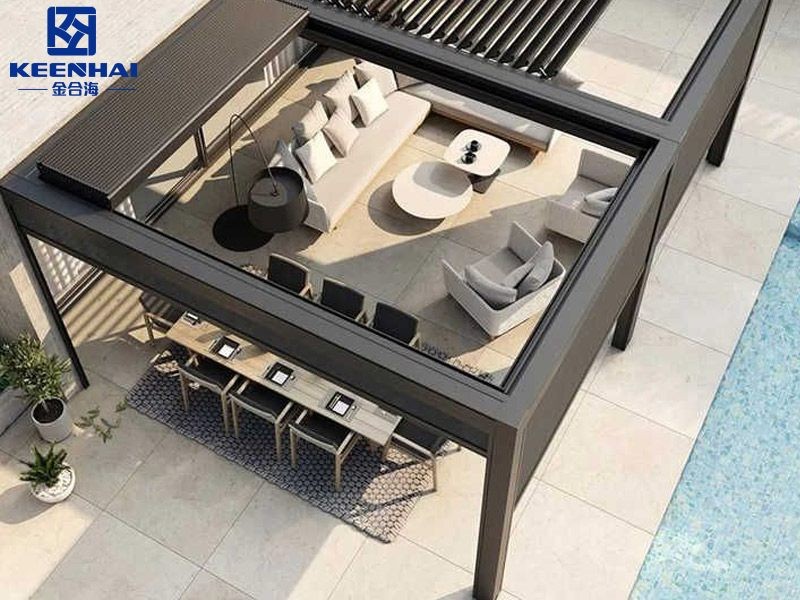
Louvered pergolas offer more flexibility than traditional pergolas when it comes to size, shape, and layout. Standard sizes range from 10x10 feet to 20x20 feet, but custom layouts can fit patios, decks, or rooftop terraces perfectly. Shapes include rectangular, square, L-shaped, or even U-shaped for larger areas.
For instance, a Louvres Pergola installed over a poolside deck was configured in an L-shape to maximize shade while keeping the pool area open for sunlight. Homeowners often combine multiple units for complex layouts without compromising structural stability.
Key considerations:
-
Measure available outdoor space accurately
-
Decide if the pergola needs multiple connected sections
-
Plan for walkways, garden beds, or patio furniture
4.2 Motorized vs Manual Operation
Motorized louvers provide convenience and precision, while manual systems are simpler and cheaper. Motorized units typically operate with 50–250W motors and can be automated with remote controls or smartphone apps. Manual models use hand cranks and require some physical effort.
| Feature | Motorized Louvered Pergola | Manual Louvered Pergola |
|---|---|---|
| Operation | Remote/automatic | Hand crank |
| Speed | 10–15 seconds to open/close | 30–60 seconds depending on size |
| Power Consumption | 50–250W | None |
| Cost | $2,000–$5,000 extra | $0–$500 extra |
| Maintenance | Occasional motor check | Minimal |
Motorized systems integrate well with Aluminum modern pergola designs, especially for rooftop terraces or luxury patios, providing smooth operation and programmable settings for sun and shade control.
4.3 Integration with Outdoor Lighting and Accessories
Modern louvered pergolas can incorporate LED lighting, retractable screens, or ceiling fans, turning them into multifunctional outdoor rooms. Aluminum frames support accessories without compromising structure, while wood might need additional reinforcement.
Typical integration steps:
-
Choose accessory type (LED strips, hanging lights, fans, heaters)
-
Confirm weight limits and mounting points on the aluminum frame
-
Plan wiring or power supply if motorized louvers are included
-
Test functionality before final installation
Outdoor lighting under Aluminum pergolas allows for evening use of patios, garden seating areas, or poolside lounges, enhancing both aesthetics and usability.
5. Return on Investment and Value
5.1 Longevity vs Upkeep Costs
Aluminum louvered pergolas provide long-term value due to minimal maintenance. With a lifespan of 15–20 years, they require only occasional cleaning and motor checks. Wooden pergolas may cost less upfront but often need sealing, staining, and board replacement, which can add $2,000–$4,000 over a decade.
Comparing aluminum and wood:
| Material | Lifespan | Annual Maintenance Cost | 10-Year Upkeep |
|---|---|---|---|
| Aluminum | 15–20 years | $50–$100 | $500–$1,000 |
| Wood | 8–12 years | $200–$400 | $2,000–$4,000 |
A Louvres Pergola installed over a backyard patio in Florida required only yearly washing and motor inspection, while a wooden pergola nearby needed board replacements and resealing twice in five years.
5.2 Impact on Property Value
A well-designed aluminum pergola can boost outdoor living appeal and property value. Real estate agents report that homes with functional outdoor spaces, including motorized pergolas, attract higher offers—typically 5–8% more in markets where outdoor living is valued. Custom shapes, integrated lighting, and automated louvers further enhance this effect.
5.3 Functional Benefits for Outdoor Living
Louvered pergolas extend usable outdoor space year-round. Adjustable louvers allow control over sunlight, ventilation, and shade, creating comfortable zones for dining, lounging, or entertainment. Features like retractable screens, ceiling fans, and LED lighting make the pergola a multifunctional area.
For homeowners who want both durability and design flexibility, aluminum options often provide the best balance. In appropriate contexts, a motorized aluminum pergola link can be inserted naturally when highlighting premium functional benefits, but otherwise, the focus remains on clear, actionable information without forcing links.